
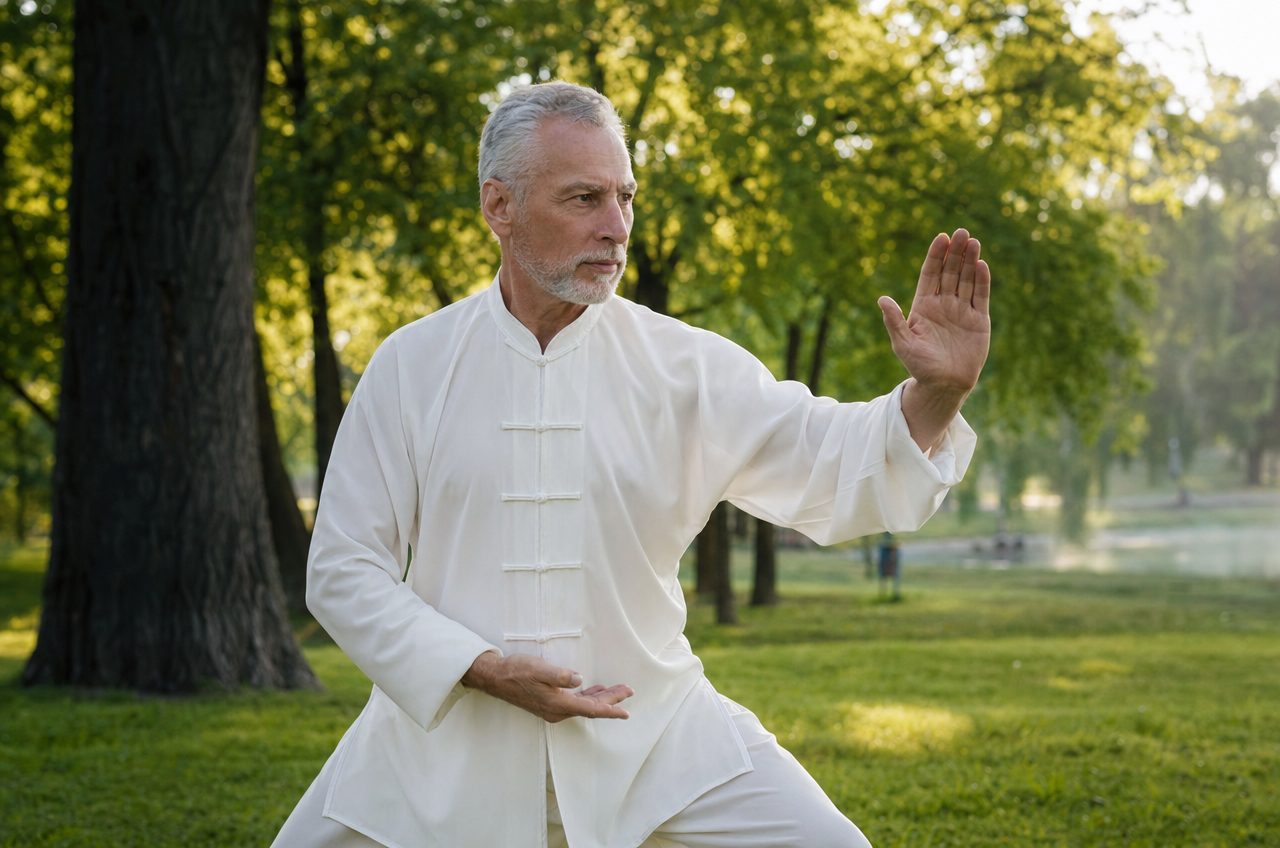
Every so often someone tells me they’d love to try martial arts but reckon they’ve left it too late. They haven’t. Plenty of people start well into their fifties and beyond, and with the right art and the right club, it’s a genuinely realistic goal, not just a nice idea.
It’s doable, but the art and the club both matter
The biggest factor isn’t your age, it’s whether you’ve picked something that suits where your body is at and a club that actually knows how to coach beginners in that stage of life. A high-intensity sparring-heavy programme aimed at competitive twenty-somethings is a bad fit for someone starting out at 55, not because it’s impossible, but because the injury risk and the mismatch in intensity make it a rough introduction. The good news is there’s a wide range of gentler entry points that still deliver real fitness, skill, and confidence.
Gentler entry points worth considering
Tai chi is probably the most obvious starting point for a lot of people, and for good reason. It’s low-impact, builds balance and body awareness, and there’s a long-established practice of it here that welcomes newcomers of any age. If you want some background on how it took hold locally, there’s more in this piece on tai chi.
Judo is another option worth a mention, particularly for the falling and rolling skills (ukemi) it teaches, which are genuinely valuable for reducing injury risk from everyday falls as we get older. That said, judo classes can get intense once you’re past the basics, with a fair amount of throwing and being thrown, so it’s worth being upfront with an instructor about wanting a measured pace rather than assuming every class will be gentle.
Boxing fitness classes, the kind built around pad work and conditioning rather than sparring, are a popular option too. You get the cardio, coordination, and stress relief of boxing training without anyone actually trying to hit you back. Most clubs offering these classes are used to a wide range of fitness levels walking in the door.
BJJ deserves a specific mention because it’s earned a reputation for having a strong older-grappler culture. It’s common to find people well into their forties, fifties, and beyond training regularly, and a lot of gyms have a genuinely welcoming attitude toward newer, older students rolling at their own pace. It’s still a physical, ground-based art though, so it’s worth choosing a gym known for a controlled, ego-free training culture rather than one built around hard competition sparring.
Setting realistic expectations
Recovery takes longer than it did at twenty, that’s just biology, so expect to need more rest days between sessions than a younger training partner might. Technique over athleticism is also the name of the game. You’re not trying to out-explode anyone, you’re trying to out-think and out-position them, and most traditional martial arts are actually built around exactly that principle. In many ways, older beginners often pick up technical detail faster than younger ones, because they’re not relying on raw speed and strength to paper over sloppy technique.
Questions worth asking before you join
A decent club will have straightforward answers to all of these, and hesitation on any of them is a bit of a red flag:
- How many other members are around my age or fitness level?
- Is there a beginner-specific class, or will I be straight into the main session?
- What’s the club’s approach to sparring intensity for newer or older members?
- Can I try a class or two before committing to a term or membership?
- Is there flexibility if I need to skip a session for recovery?
These are exactly the kind of questions worth asking regardless of age, and the same choosing-a-class criteria that apply when picking a kids’ class apply just as well here, you’re looking for good coaching, sensible class structure, and a culture that matches your goals.
A quick word on medical checks
If it’s been a while since you’ve done regular physical training, or you have any existing health conditions, it’s worth having a chat with your GP before starting anything new, just to make sure whatever you choose is a sensible fit for your current health. Most clubs will encourage this too, rather than see it as an inconvenience.
Starting later doesn’t mean starting behind. It just means picking sensibly and being honest with yourself and your instructor about what your body needs.