
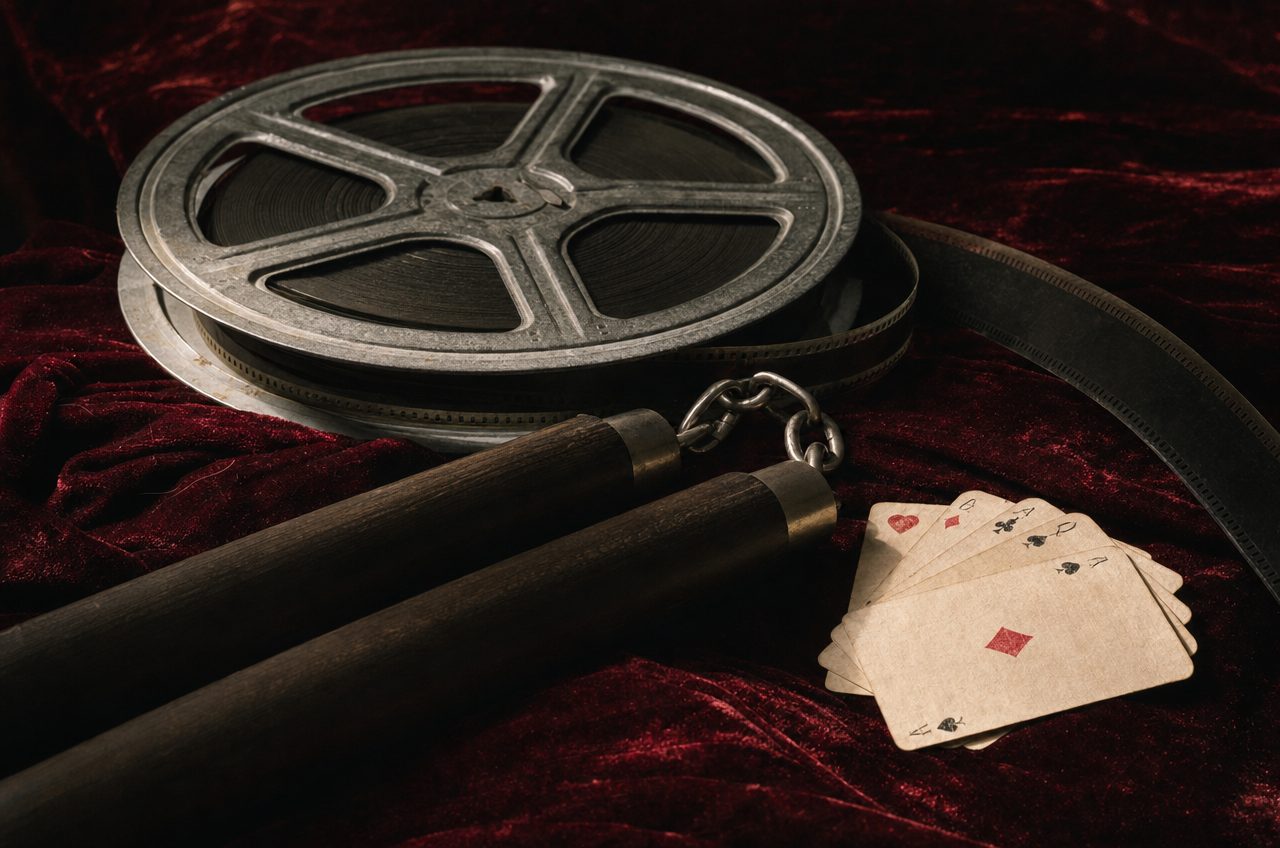
Long before anyone was designing a bonus round, a handful of martial arts films worked out how to tell a fight story on screen. Anyone who has sat through a session of combat themed pokies has probably noticed the same beats turning up: a tournament, a training montage, a master handing down knowledge before the final bout. That’s not a coincidence. Those beats came from cinema, and game designers borrowed them wholesale.
The Tournament Structure We All Know
Enter the Dragon is the obvious starting point. Its plot is essentially a martial arts tournament held on a private island, with a string of opponents to work through before the real villain shows up. That structure, heats leading to a final, is one of the cleanest storytelling shapes there is, and it’s exactly the shape a bonus round wants. Climb through stages, each one harder, until you reach the boss. Games didn’t need to invent that arc. Enter the Dragon and the films that followed had already proven it works.
Bloodsport and the Underground Fight Trope
Bloodsport pushed the tournament idea further underground, literally, with its secretive Kumite setting. That underground fight club aesthetic, hidden venue, unknown fighters, no rules to speak of, became its own genre trope and it maps onto bonus features almost too neatly. A “hidden” or “secret” bonus round that only unlocks under certain conditions is basically the Kumite in slot machine form: something exclusive that most players won’t see, reserved for those who make it that far.
Bloodsport is also tied to a genuinely interesting piece of martial arts history. We put together an interview a while back with Peter Ralston, the real fighter often linked to the story that inspired the film, and it’s worth a read if you want the version of that underground tournament myth that actually happened rather than the Hollywood one.
Dojo Aesthetics and the Master-Student Story
A lot of kung fu cinema iconography comes down to the dojo or training hall itself: sparse rooms, wooden floors, a master figure who says little and demands everything. Films built entire arcs around a student earning knowledge through discipline rather than shortcuts. That aesthetic shows up constantly in samurai and kung fu themed games, usually as the backdrop art behind the reels, calm and minimal, in deliberate contrast to the chaos of the bonus round itself. It’s a visual shorthand for legitimacy. A game wrapped in dojo imagery is borrowing the idea that what’s happening on screen has been earned through training, even though nothing about a random spin is earned at all.
Ong-Bak and The Raid: A More Physical, Modern Language
Ong-Bak and The Raid represent a different, more recent strand of the same cinema, built around close quarters, practical stunt work and a rawer sense of danger than the more choreographed tournament films. Games that lean into MMA or modern hand-to-hand combat themes tend to pull from this newer visual language rather than the classic tournament arc, favouring tighter, grittier framing over the wide, formal shots you’d get from an old school martial arts tournament film. It’s the same underlying appeal, competition and skill, just filtered through a more contemporary lens.
Why the Underground Tournament Trope Fits So Well
If you strip it back, the reason this all translates so cleanly is that both mediums are solving the same problem: how do you give a player or a viewer a reason to keep going without a real story unfolding in front of them. Film uses a tournament to create escalating stakes with minimal setup. A bonus round needs exactly the same thing, a reason for the next spin to feel more significant than the last. The underground fight trope in particular works because it implies exclusivity and risk without needing to explain either. You don’t need three acts of character development to understand that reaching the next hidden round feels like getting further into the Kumite than most people manage.
None of this is really about accuracy to the sport. It’s about borrowing a visual grammar that cinema spent decades perfecting, and it’s a big part of why combat themes keep outperforming a lot of the alternatives in game lobbies. If you want to see how that plays out in specific titles, I covered a range of them in an earlier piece on combat-themed casino games.
What strikes me most, looking back at these films now, is how much of their power came from restraint rather than spectacle. The best scenes in Enter the Dragon or Bloodsport aren’t the flashiest ones, they’re the quiet build before a confrontation, the moment a master weighs up a student. Games rarely have room for that kind of patience, since a bonus round has seconds rather than minutes to make its point, but the fact that they still reach for dojo stillness and tournament ceremony tells you how deeply those cinematic patterns took hold. Even stripped of pacing, the shorthand still does its job.
Casino-style games are for adults 18+. If gambling stops being fun, free help is available through the Gambling Helpline NZ.