
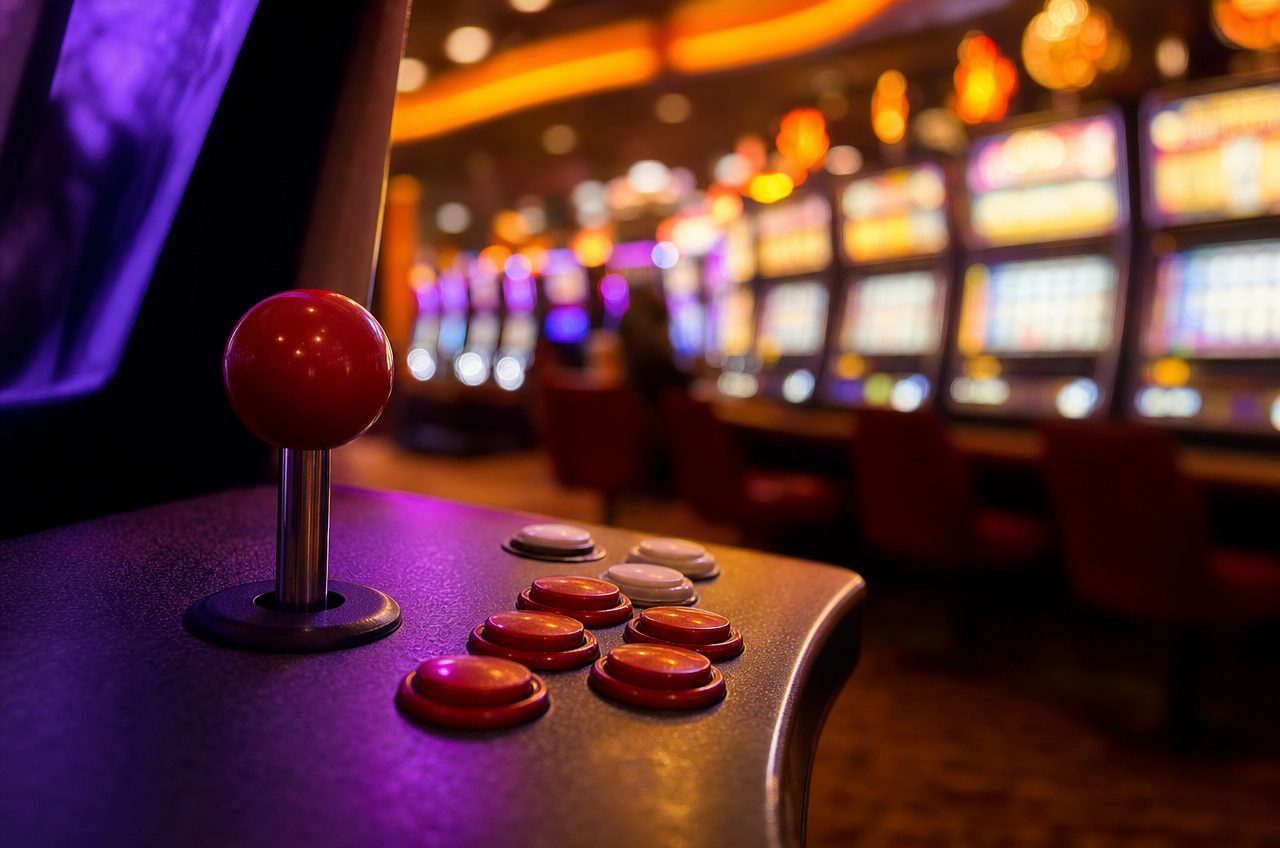
I grew up feeding coins into cabinets long before I ever set foot in a dojo, and it’s funny how much of that arcade language has quietly ended up on casino game screens. Health bars, character select grids, combo counters, none of it belongs to gambling by rights, but it’s been borrowed so thoroughly that it’s worth picking apart where it actually came from.
Where the Visual Language Started
Street Fighter, Mortal Kombat and Tekken didn’t just define arcade fighting games, they defined how a fight is displayed on a screen at all. Two health bars at the top, a timer in the middle, a roster of characters to choose from before anything starts. That’s now such a familiar layout that most people don’t register it as a design choice, but someone had to invent it, and those three franchises did more than anyone to lock it in as the standard.
Character select screens in particular did something clever: they turned choosing who to play as into part of the ritual, a moment of anticipation before the actual contest. That’s a pattern casino game designers picked up on directly. A lot of fighting themed games now open with a similar choice, pick your fighter, pick your path through the bonus round, even though the underlying odds don’t actually change based on what you pick.
Combos, Streaks and the Feeling of Momentum
Fighting games built their appeal on the idea that skillful play compounds. String hits together and you get a combo, and the game rewards you with bigger numbers and flashier feedback the longer you keep it going. Win streaks worked the same way at a meta level, beating opponent after opponent without a loss.
Casino games have taken that feedback loop and kept the feeling while stripping out the skill underneath it. A “streak” or “momentum” meter that builds through a bonus round looks and sounds exactly like the fighting game version, escalating visuals, bigger multipliers, a sense that you’re on a roll. The difference is that in a fighting game, the streak exists because you executed something correctly. In a pokie, it exists because the game decided it would, regardless of anything the player does.
Health Bars as a Storytelling Shortcut
A health bar is one of the most efficient pieces of UI ever designed. At a glance it tells you how the fight is going, no words needed. Combat themed casino games use the same trick, usually in bonus rounds framed as a battle against an opponent, where a bar draining down signals progress toward a win in a way that’s instantly readable even to someone who’s never played the game before. It’s a straight lift from fighting game UI, and it works for the same reason it always has.
The Honest Difference: Skill Versus Chance
Here’s where I think it’s worth being blunt. Arcade fighters are skill games. Your reflexes, your reads on an opponent, your execution under pressure, all of that genuinely determines the outcome. Two players can sit down at the same Tekken cabinet and the more skilled one will win far more often than not, over any reasonable sample size.
Pokies are not that. However a bonus round is dressed up, whatever streak or combo language is layered on top, the outcome is governed by a random number generator. Nothing about picking a character, timing a button press or choosing a path changes the odds. I’ve written before about how fighting themed pokies borrow tournament structure and rank progression as framing devices, in a separate look at fighting-themed pokies, and the same point applies here. The framing implies skill. The mechanics don’t deliver it.
Nostalgia as the Real Selling Point
If the skill isn’t real, what is the appeal? Mostly nostalgia. A lot of the people drawn to fighting themed casino games grew up on the exact arcade cabinets that set this visual language in the first place. Seeing a health bar drain or a character select grid pop up taps into a specific memory of standing in front of a cabinet as a kid, and that association does a lot of heavy lifting regardless of what game it’s attached to. It’s a well worn design trick across entertainment generally, not just casino games, and it’s honestly one of the more understandable reasons these themes have stuck around as long as they have.
Casino-style games are for adults 18+. If gambling stops being fun, free help is available through the Gambling Helpline NZ.