
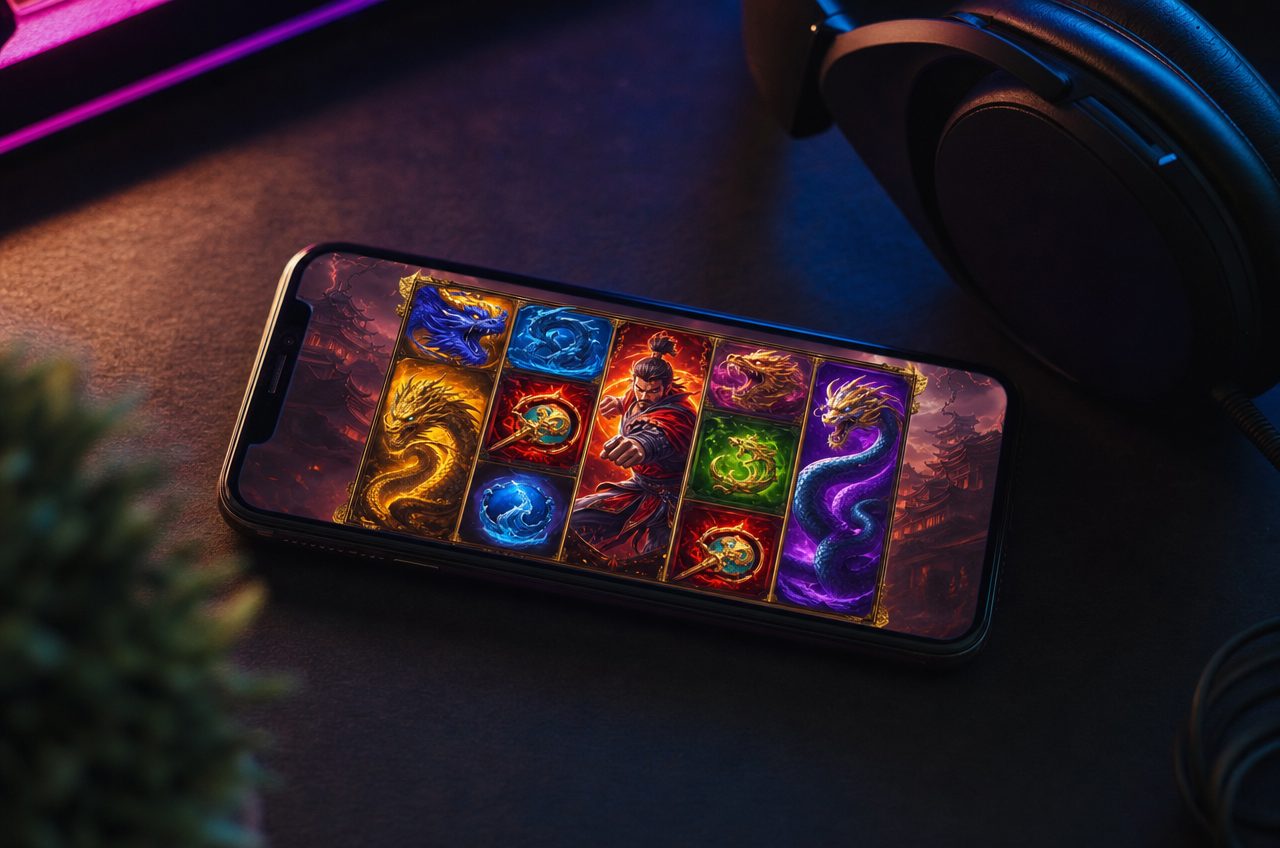
I’ve spent a fair few years on mats and in boxing gyms, and somewhere along the way I started noticing how often combat sports show up as the theme behind pokie machines. Ancient warriors, robed samurai, boxers in satin shorts, cage fighters mid takedown. It’s everywhere once you start looking. So I sat down and thought about why fight themes keep getting reused by game studios, and what they actually borrow from the sports we train in.
Why Fighters Make Such Good Reel Heroes
Combat sports come with a structure that’s basically ready made for game design. There’s a clear hero, a ladder of opponents to work through, and a final showdown that matters more than the ones before it. That’s a tournament bracket, and it maps neatly onto how a bonus round is built. Instead of one flat payout table, the player climbs through stages that feel like rounds in a fight, each one a bit tougher and a bit more rewarding than the last.
It also helps that a fighter is instantly readable as a character. You don’t need three paragraphs of backstory to understand a warrior holding a sword or a boxer with wrapped hands. The visual shorthand does a lot of the storytelling for free, which matters when a game only has a few seconds to hook someone scrolling through a lobby.
The Mechanics That Echo a Fight Card
Once you look past the artwork, a handful of mechanics turn up again and again in combat themed pokies. None of them are unique to fighting games, but they get dressed up in fight language in ways that feel deliberate.
- Bonus rounds framed as a sequence of “fights” or “rounds” rather than a single free spin feature
- Symbol upgrades presented as rank or belt progression, so a basic symbol becomes worth more as the reel session goes on
- A “boss” symbol or final stage that pays out differently to the rest, mirroring a championship match
- Meter or gauge visuals that fill up like a stamina or momentum bar, borrowed straight from fighting game UI
None of that changes how the underlying game works. It’s still a random number generator under the hood. But framing outcomes as fight progression gives players a narrative to hang the session on, which is a big part of why these themes stick around.
Art Styles Every Martial Artist Will Recognise
There are a handful of visual lanes that keep coming back. Ancient warrior and gladiator themes lean on armour, arenas and mythology. Samurai themes lean on minimalism, cherry blossoms and katana silhouettes, and several studios have built samurai themed titles over the years because the aesthetic photographs so well on a small screen. Boxing themes go for a grittier, old gym look, all leather gloves and chalky corners. MMA themed games are newer and tend to borrow cage and octagon imagery directly, which is the most literal of the lot.
I’ve covered some of the actual games built around these ideas in an earlier piece on combat-themed casino games, if you want to see how the themes play out title by title rather than style by style.
What Designers Actually Get Right
Credit where it’s due, some of this is well observed. The better samurai themed games get the stillness right, that sense of restraint before a single decisive movement, which is a real part of how Japanese sword arts are taught and performed. Boxing themed games often nail the corner atmosphere, the tension before a bell, in a way that feels lifted from ringside rather than guessed at. And the tournament ladder structure genuinely does reflect how competitive combat sport works, from local club nights up to a title fight.
Where the Realism Falls Apart
Where it usually comes unstuck is technique. Stances are often exaggerated for visual drama rather than anything you’d actually be taught in a gym, and the “power” of a strike in these games has nothing to do with technique, timing or distance the way it would on a mat. That’s fine, they’re not trying to be training tools, but it’s the giveaway that tells you a game was built by an art team rather than anyone who trains. The other thing that never quite lands is pacing. Real fights have long stretches of feeling each other out before anything decisive happens. Games skip straight to the highlight reel, because nobody wants to watch a slow build on a five second bonus round.
None of that is a knock on the games as entertainment. It’s just the gap between what looks like a fight and what training for one actually feels like.
Casino-style games are for adults 18+. If gambling stops being fun, free help is available through the Gambling Helpline NZ.