
Krav maga gets asked about more than almost any other system when people are choosing a self-defence class, usually because of its reputation as the thing Israeli soldiers train. That reputation is part fact and part marketing, so it’s worth pulling the two apart before you sign up anywhere.
Where krav maga actually comes from
Krav maga was developed in the mid-20th century by Imi Lichtenfeld, who drew on his background in boxing and wrestling to build a practical hand-to-hand system, initially for use by Jewish self-defence groups in Europe and later formalised for the Israeli military. The core idea was always efficiency over form: solve the immediate problem in front of you rather than perform a technique correctly for its own sake. That military and civilian-defence origin is genuine, and it shapes a lot of what still makes krav maga distinct from combat sports and traditional martial arts today.
Since then it’s spread widely and split into many different organisations and lineages worldwide, each with its own emphasis, so “krav maga” as a label covers a fairly broad range of training quality and content depending on who’s teaching it.
What a typical class looks like
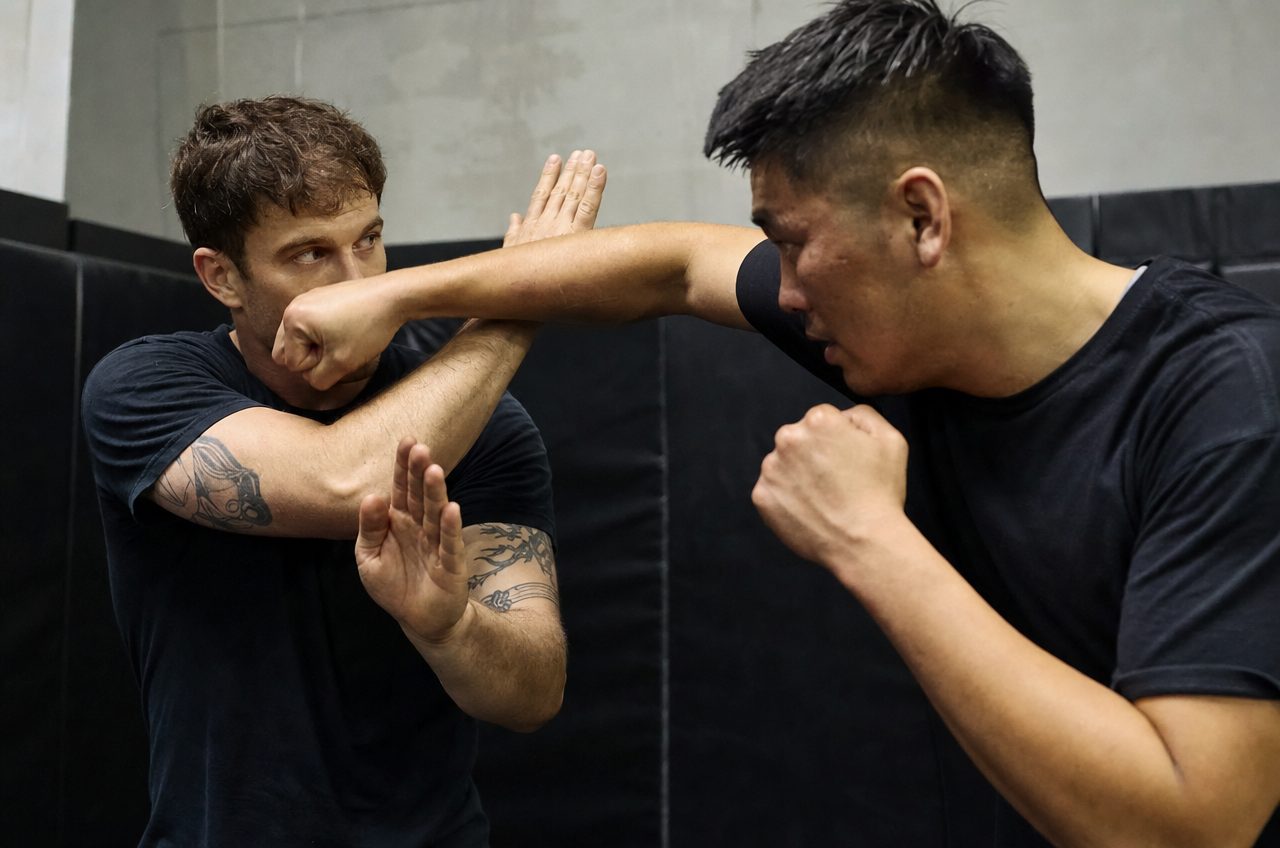
Most krav maga classes open with a fitness-focused warm-up, since a lot of the system leans on being able to move explosively for short bursts. From there you’ll usually drill specific defences against common attacks: chokes, grabs, straight punches, sometimes weapon threats like a knife or blunt object. Techniques tend to be simple and built around gross motor movement rather than fine technical detail, on the logic that fine motor skills fall apart under adrenaline. Many classes finish with some scenario or stress drilling, where you respond to a surprise attack at speed rather than a pre-arranged pattern.
Sparring in the boxing or BJJ sense is usually lighter or less frequent than in combat sport gyms, though this varies a lot by club and by how experienced the students are.
What it does well
The simplicity is genuinely a strength, not a limitation. Because techniques are built to work under stress with minimal refinement, they’re relatively quick to pick up compared to the years it takes to get technically sharp in something like boxing or BJJ. The scenario training and emphasis on aggression and follow-through also fills a gap that a lot of purely technical martial arts leave open: teaching people to actually commit to defending themselves rather than freezing. For people who want practical tools without committing to years of technical development, that’s a real advantage.
Where it comes up short
The honest limitation is pressure-testing. Combat sports like boxing, Muay Thai, wrestling and BJJ put you against a live, resisting opponent who’s genuinely trying to beat you, over and over, which builds a kind of tested reliability that’s hard to fake. A lot of krav maga training, especially at lower levels, is drilled against a compliant or semi-compliant partner, so techniques can look great in class and fall apart against someone who’s actually resisting.
Club quality also varies enormously. Because there’s no single unified krav maga organisation and the name isn’t trademarked in any consistent way, you can find excellent instructors with real operational or competitive backgrounds right next to clubs that are mostly enthusiasm and choreography. There’s no shortcut here other than watching a class, asking about the instructor’s background, and seeing how much genuine resistance shows up in training.
How it compares to modern versus traditional systems
It’s worth remembering that “modern” and “traditional” aren’t opposites so much as different tools built for different problems. We touched on this in our restored Blitz interview with Dr Rony Kluger, who teaches both traditional Okinawan karate and krav maga and has spent decades moving between the two worlds. His point was that krav maga is built to solve an immediate problem quickly, while traditional martial arts are built as long-term development, and the two aren’t really in competition, they just answer different questions.
Who it actually suits
Krav maga tends to suit people who want practical self-defence skills without a multi-year commitment to a combat sport, or who like the fitness and scenario-based format. It’s less suited to people whose main goal is competition, or who want the kind of deeply tested skill that only comes from regular live sparring against resisting opponents. If that’s your goal, pairing krav maga with even a bit of boxing, wrestling or BJJ tends to round out the gaps nicely. As with most training decisions, the club and instructor in front of you matter more than the label on the door.