
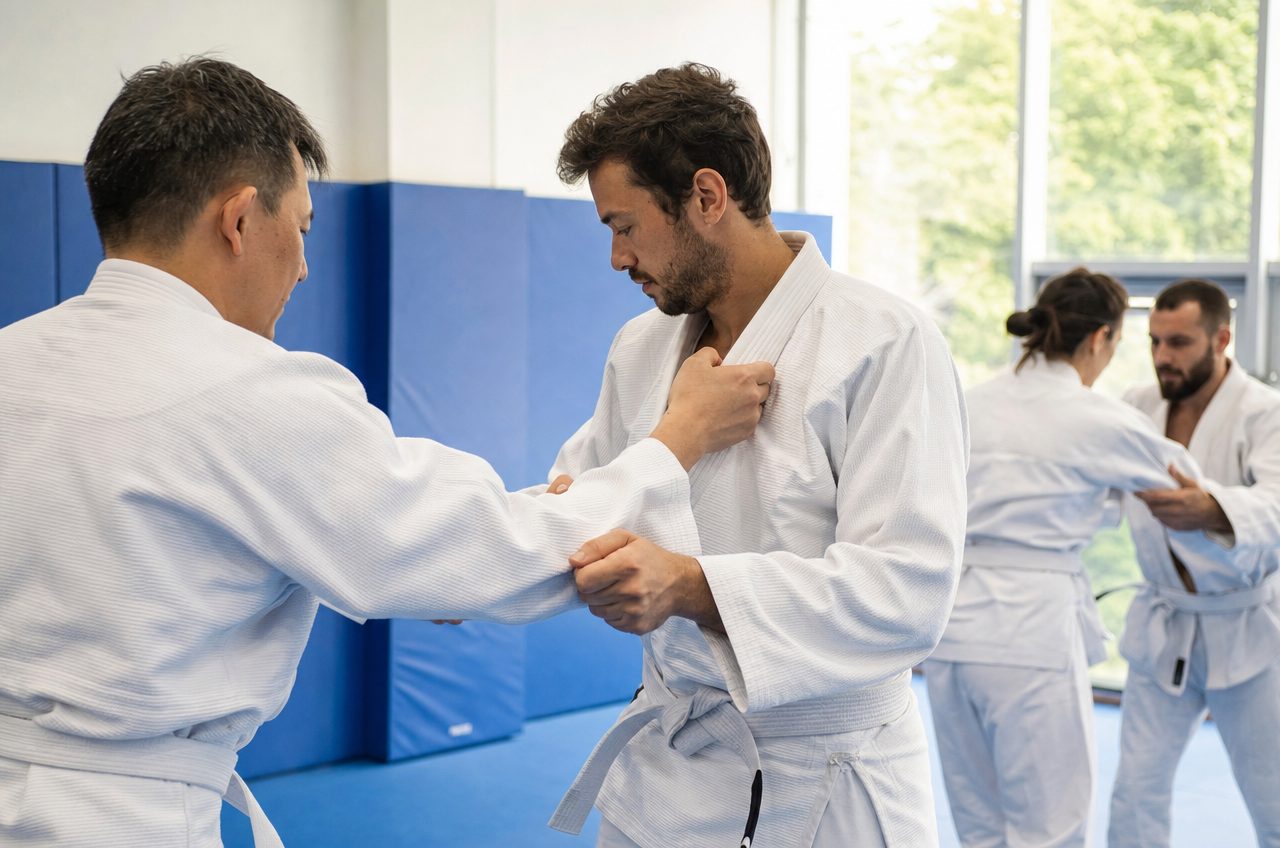
Walking into a jiu-jitsu gym for the first time as an adult is a bit like turning up to a new job where everyone else already knows the office politics. Nobody’s going to bite you (well, not literally), but it helps to know what you’re walking into. I’ve had a few mates start BJJ in their thirties and forties and they all say the same thing afterwards: they wish someone had told them a few basics before day one.
What your first class actually looks like
Most clubs run beginner or fundamentals classes separately from the main adult program, and that’s usually where you’ll start. Expect a warm-up, some drilling of a technique or two, then light, controlled sparring (called rolling) if the instructor thinks the class is ready for it. On your first night you’ll probably just watch or drill slowly with a patient partner. Nobody expects a beginner to roll hard, and any decent coach will pair you with someone who won’t crank on anything.
Don’t stress about remembering every technique. In the early months you’re mostly building body awareness and learning to be comfortable being uncomfortable. That takes reps, not memory.
Gi or no-gi: does it matter which you start with
Gi BJJ uses the heavy cotton jacket and pants (the “gi” or kimono) and involves a lot of gripping on the fabric. No-gi is done in rashguards and shorts, more like grappling or wrestling, and tends to be faster with fewer grip-based control options. Neither is more “real” than the other, they’re just different rulesets with overlapping fundamentals.
Most clubs teach mainly gi, especially early on, because the grips give beginners more to hold onto (literally) while learning control and positions. If a club offers both, it’s worth trying each for a few weeks before deciding what you prefer. Plenty of people end up doing both across the week.
What to actually buy (hint: not much)
This is where a lot of adult beginners overspend. Here’s what you genuinely need at the start:
- Comfortable athletic clothes for your first couple of sessions (most gyms will let you try a class or two before you need a gi)
- A mouthguard once you start any live rolling
- Basic hygiene gear: flip-flops for walking around the gym floor, a gym towel, hand sanitiser
Hold off on buying a gi, rashguards, or spats until you’ve spoken to your specific club, since some have preferences on colour or brand for grading purposes. Ask the front desk or your instructor before you spend money. Most gyms will also have loaner gis for your first few sessions.
Gym etiquette nobody tells you about
BJJ culture has some unwritten rules that make sense once you know them. Bow or nod when stepping on and off the mat. Keep your fingernails and toenails trimmed short. Wash your gi and rashguard after every single session, nobody wants to roll with someone who skipped that step. Tap early and tap often when caught in something uncomfortable, tapping isn’t losing, it’s how you get to train again tomorrow. And always ask before you start rolling with someone you haven’t trained with, particularly if there’s a size or experience gap.
If you’re heavier or stronger than your partner, dial it back. The goal in a beginner roll is technique, not seeing who can use more muscle.
Finding a club that suits you
New Zealand’s BJJ scene has grown a lot over the last decade, with clubs scattered through most main centres. The NZBJJF is the national federation and its site is a reasonable starting point if you want a sense of the wider competitive scene, including the events run through it, though for training you’ll want to look locally rather than nationally. Most Auckland and Wellington gyms offer a free trial class or two, so it’s worth trying a couple within reasonable driving distance before committing to a membership. Pay attention to how the coaches teach beginners, how safe the sparring feels, and whether the existing students are welcoming rather than cliquey. If you’re keen to see the competitive side of the sport once you’re a bit further along, our roundup of BJJ events in New Zealand is worth a look.
Managing ego and injuries as an older beginner
This is the part that trips up most adult starters. You will get tapped out by people half your age and half your size, often repeatedly, for months. That’s normal and it doesn’t mean you’re bad at it, it means everyone else has more reps than you. Leave your ego at the door and treat every roll as a puzzle rather than a fight to win.
Your body will also need more recovery time than it did at twenty. Warm up properly, communicate with training partners about any old injuries before you roll, and don’t be afraid to sit out a round if something feels off. Most instructors would rather you train for twenty years at a sensible pace than push through pain and end up sidelined for months. Consistency beats intensity, especially when you’re starting later in life.